

About Francesca Salvini

August
What the landscape doesn’t show
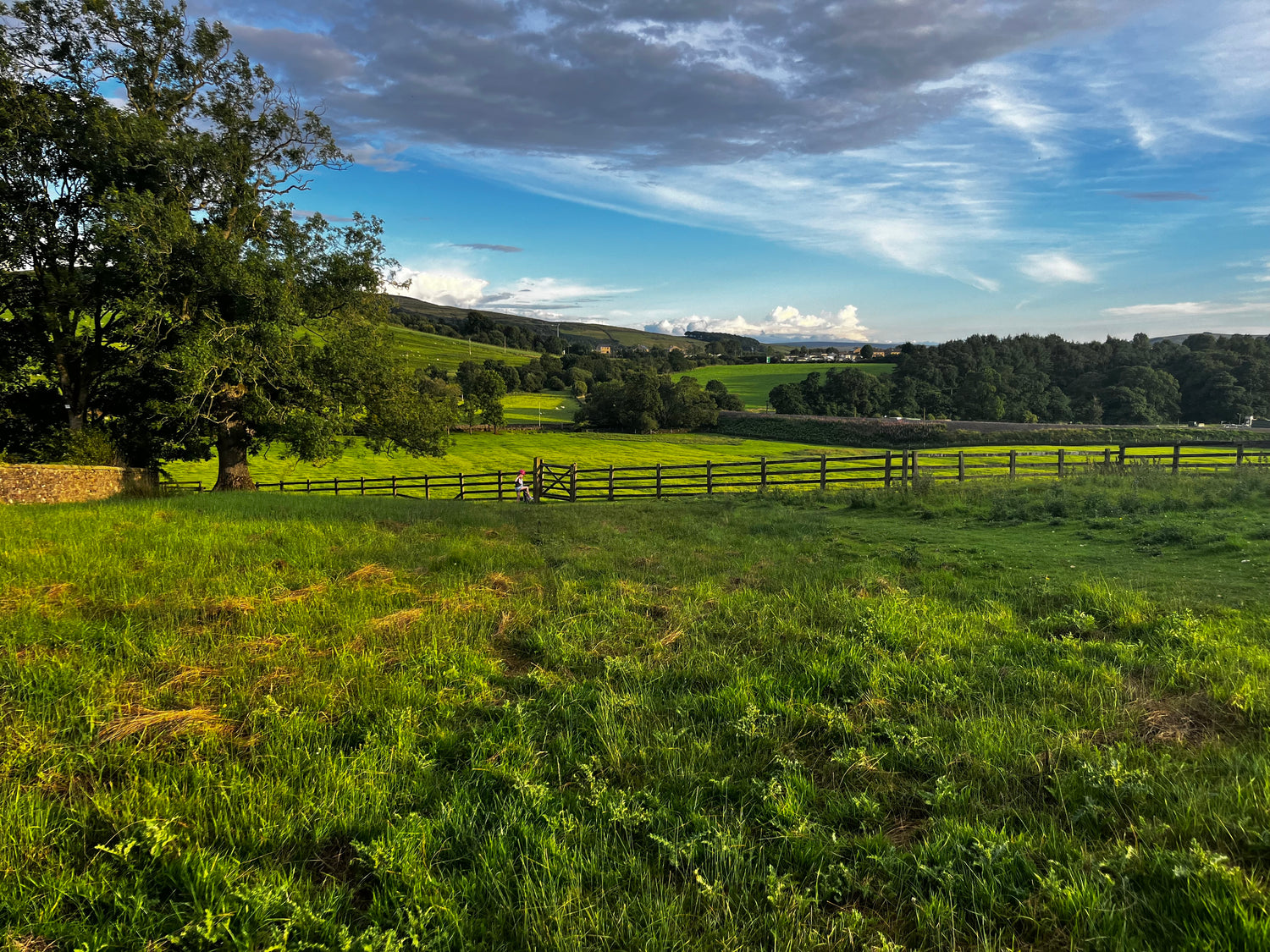
I never try to paint what I see—only how it feels. The colours I reach for, the marks I make, are shaped by memory, movement, and mood. The landscape might offer a horizon, a shadow, or a shift in light—but I’m more interested in the atmosphere it leaves behind.
What stays with me isn’t the shape of a hill or the curve of a path. It’s the feeling of wind pressing against my back, the weight of a grey sky, the silence that settles just before rain. The view is just the starting point. What ends up on the canvas is something remembered, reimagined, and sometimes completely undone.
July
The chaos before the calm
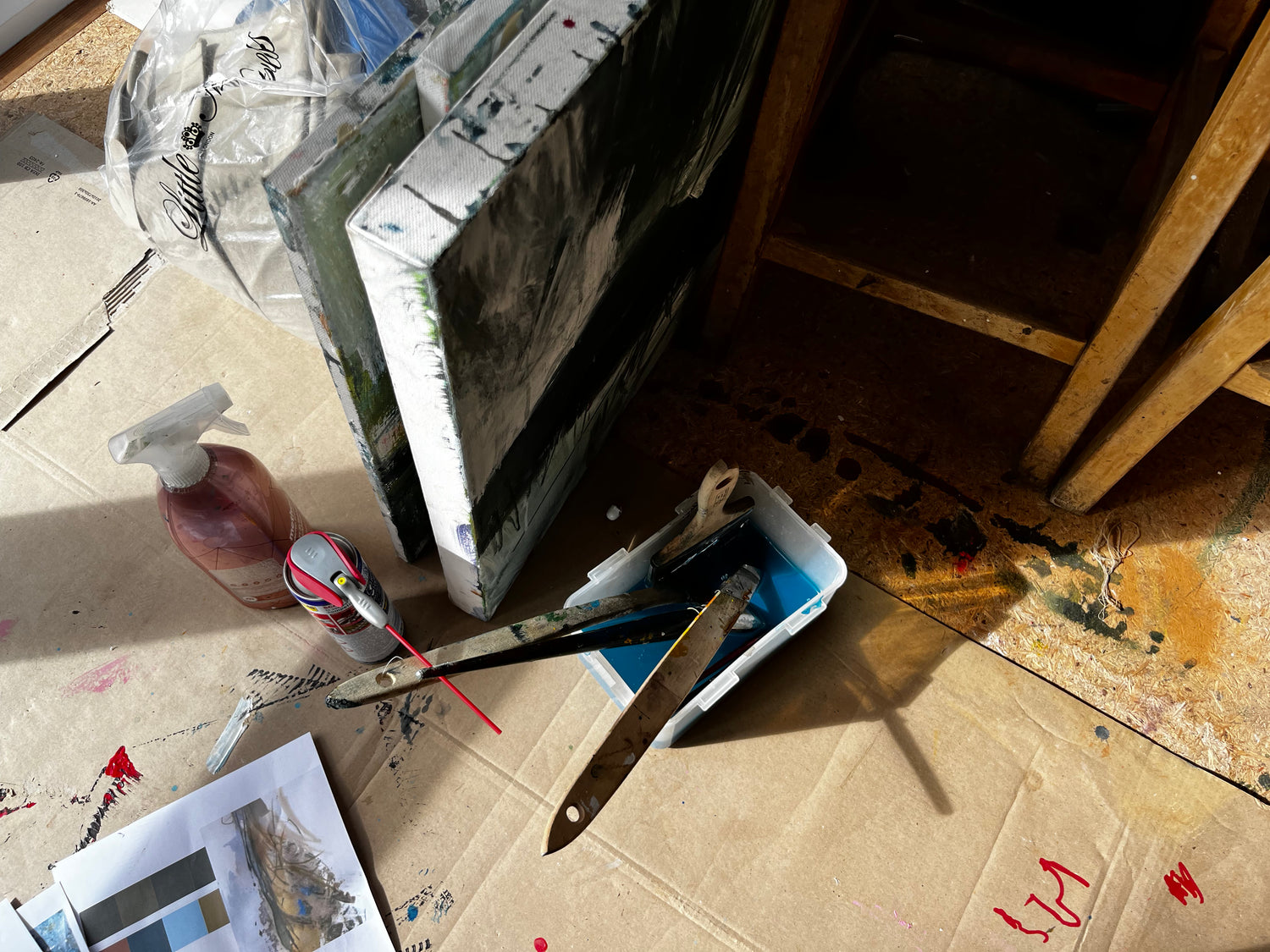
People often ask if my studio is peaceful. Not always. There’s paper everywhere, brushes left in tea cups, and a floor that’s half covered in footprints and paint splatters. Most days, there’s at least one half-finished painting propped against the wall that I’m trying not to overthink.
But I’ve come to realise that the mess is part of it. The clutter, the chaos, the not-quite-knowing—it all plays a role. That’s where the looseness comes from. That’s where the unexpected happens. The magic doesn’t arrive when everything’s tidy. It shows up in the middle of it all.
June
Sketchbooks I never show
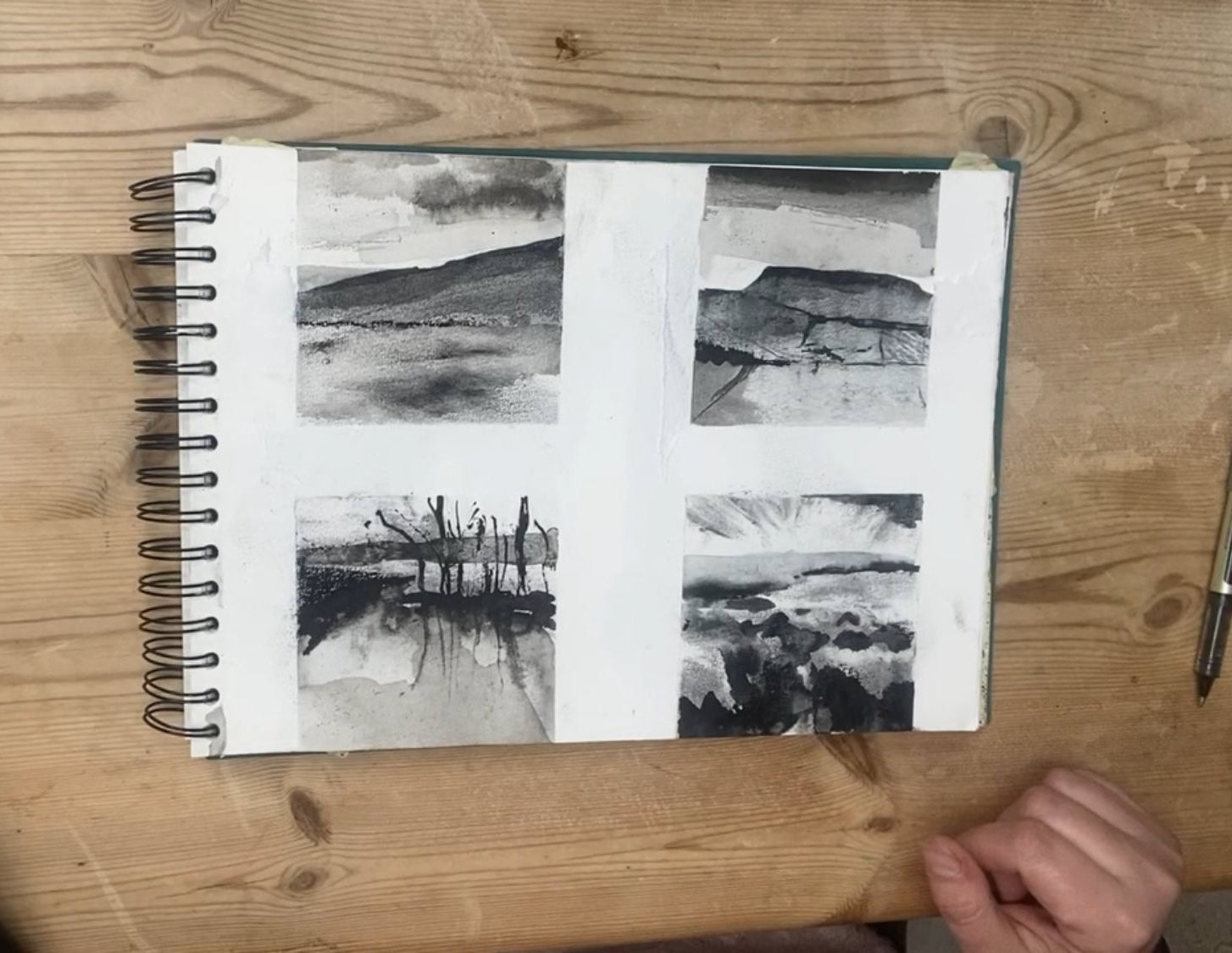
My sketchbooks are full of half-ideas—loose marks, quick colour tests, things that didn’t quite work but might lead somewhere else. They’re not made to be pretty. They’re rough, unfinished, and often messy, but that’s exactly why they matter.
This is where I try things out without pressure. Where accidents spark new directions. A torn edge, a scribbled note, a colour combination I’d never have planned—these are the seeds of future work. Sometimes what begins as a throwaway page becomes the start of a whole new painting.